
"World War II"
600 article(s) found

The Origin of the name of Manning Coffee introduction to the History of Indonesian Manning Coffee
The name is edited Manning is not the name of the producing area, the place name, the port name, nor the name of the coffee breed. How did its name come from? In fact, it is the transliteration of the mandheling people in Mandaining, Indonesia. During the Japanese occupation of Indonesia during World War II, a Japanese soldier

Development history of coffee machine A brief history of coffee machine development in Italy
At the beginning of the 20th century, an impatient engineer living near Napoli, Italy, was impatient with dripping coffee for too long, so he came up with a way to make coffee in a high-temperature and high-pressure way to shorten the time, so he invented the world's unique Italian coffee for quick cooking, and Espresso became popular. This impatient project
How did Manning, a common sense of coffee culture, get his name?
Manning is not the name of the producing area, the place name, the port name, nor the name of the coffee breed. How did it get its name? In fact, it is a phonetic error of the mandheling people in Mandaining, Indonesia. During the Japanese occupation of Indonesia during World War II, a Japanese soldier drank mellow coffee in a cafe, so he asked the shopkeeper the name of the coffee, and the boss mistook him for asking where you were.

Introduction to the origin of the name of the elegant Mantenin coffee bean
Tenin is not the name of the producing area, the place name, the port name, nor the coffee variety name. How did its name come from? In fact, it is a phonetic error of the mandheling people in Mandaining, Indonesia. During the Japanese occupation of Indonesia during World War II, a Japanese soldier drank mellow coffee in a cafe, so he asked the shopkeeper the name of the coffee, and the boss mistook him for asking where you are from.

Brazil Queen Estate Yellow Bourbon Coffee Bean Grinding Scale Production Area Variety Introduction
Brazil has been figuratively compared to the giants and kings of the coffee world. There are about 3.97 billion coffee trees, and small farmers now grow 75 percent of Brazil's coffee. Brazil has twice or even three times as many coffee producers as Colombia, which is the world's second-largest coffee producer. Unlike in the past, Brazil's economy is now less dependent on coffee.

Why do Koreans like to have a cup of American coffee after eating noodles soybean paste?
For professional baristas, please follow the coffee workshop (Wechat official account cafe_style). There is a question on Zhihu. Why do Koreans like American coffee? The questioner, who works in a coffee shop, noticed that if a group of Koreans came in, nine times out of ten it was iced americano,take-away cup. It is said that South Koreans' obsession with Americano is a bit like Chinese people's cappuccino.
The Origin characteristics of Indonesian Coffee name
Manning is not the name of the producing area, the place name, the port name, nor the name of the coffee breed. How did it get its name? In fact, it is the transliteration of the mandheling people in Mandaining, Indonesia. During the Japanese occupation of Indonesia during World War II, a Japanese soldier drank mellow coffee in a cafe, so he asked the shopkeeper the name of the coffee.

The Cultural History of Coffee beans how did Manning's name come from
Manning is not the name of the producing area, the place name, the port name, nor the name of the coffee breed. How did it get its name? In fact, it is a phonetic error of the mandheling people in Mandaining, Indonesia. During the Japanese occupation of Indonesia during World War II, a Japanese soldier drank mellow coffee in a cafe, so he asked the shopkeeper the name of the coffee, and the boss mistook him for asking where you were.

Description of Flavor and taste of boutique Coffee beans in El Salvador Coffee producing area
Republic of El Salvador, Repblica de El Salvador in Spanish, the Republic of El Salvador in English. It is located in Central America, bordering Guatemala and Honduras in the north, and the Pacific coastline in the west and south. The smallest country in Central America and the most densely populated country in Central America. The land area is 21393 square kilometers.
Flavor description of Brazilian Coffee beans introduction to the taste of grinding scale manor
Brazil is vividly compared to the giant and monarch of the coffee world. There are about 3.97 billion coffee trees there, and small farmers now grow 75% of Brazil's total coffee production. The number of coffee producers in Brazil is twice or even three times that of Colombia, the second largest coffee producer in the world. Unlike in the past, Brazil's economy is now less dependent
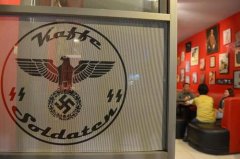
Indonesia Nazi-themed Cafe reopens Nazi Cafe Indonesia a year after ignoring condemnation
A Nazi-themed soldier cafe in Indonesia opened in 2011. It was pushed to the forefront in July 2013 when a British journalist living in the area published an article. As international condemnation intensified, the local government had to ask shopkeepers to close the coffee shop. According to a report in the French newspaper Liberation on June 22, the coffee shop recently regained its strength and opened again.

What are the characteristics of Guatemalan coffee? what are the COE winning beans in Guatemala?
For more information on coffee beans, please follow the coffee workshop (Wechat official account cafe_style) since Guatemala became independent in 1838, the Spaniards introduced coffee to Guatemala for cultivation. They took advantage of the industrious nature of the local Mayans and cheap labor to produce cheap coffee and supply the whole of Latin America until 1970.

History of coffee machine A brief history of the development of coffee machine in Italy
Ⅰ, a brief history of the development of Italian coffee machines, I do not know who first wrote this paragraph: at the beginning of the 20th century, an impatient engineer living near Napoli, Italy, was impatient with dripping coffee for too long, so he was waiting for time to come up with a way to brew coffee in a high-temperature, high-pressure way to shorten the time, so he invented a unique meaning in the world.

The common sense of fine coffee the origin of the name of Mantenin coffee
Manning is not the name of the producing area, the place name, the port name, nor the name of the coffee breed. How did it get its name? In fact, it is a phonetic error of the mandheling people in Mandaining, Indonesia. During the Japanese occupation of Indonesia during World War II, a Japanese soldier drank mellow coffee in a cafe, so he asked the shopkeeper the name of the coffee, and the boss mistook him for asking where you were.

Is drinking black coffee useful to lose weight? can drinking black coffee in the morning have the effect of losing weight?
Professional Coffee knowledge Exchange more information on coffee beans Please follow the coffee workshop (Wechat official account cafe_style) American coffee, whose name comes from the war, was born after World War II. When the Americans ended their war with Europe, a lot of troops came to southern Europe, but they couldn't drink espresso, so they chose to open it warm.
Three waves of coffee in history
The first coffee wave: in the 1930s and 1940s, the US military took coffee as a necessity around the world to prevent combat fatigue, and the bitterness of coffee was known by the public as a pick-me-up. Then the invention and rise of instant coffee. The second Coffee Wave: after World War II, the Italian method of steam pressure extraction of espresso began to be familiar and accepted.

Three coffee waves
The first coffee wave: in the 1930s and 1940s, the US military took coffee as a necessity around the world to prevent combat fatigue, and the bitterness of coffee was known by the public as a pick-me-up. Then the invention and rise of instant coffee. The second Coffee Wave: after World War II, the Italian method of steam pressure extraction of espresso began to be familiar and accepted.

Three coffee waves in coffee culture history
The first coffee wave: In the 1930s and 1940s, the U.S. military brought coffee to all parts of the world as a necessity to prevent fatigue during combat, and the bitter taste of coffee served as a refreshing effect. Then came the invention and rise of instant coffee. Second coffee wave: After World War II, Italy's method of steam pressure extraction of espresso began to be familiar and accepted.
Three waves of Coffee in the History of Coffee
The first coffee wave: in the 1930s and 1940s, the US military took coffee as a necessity around the world to prevent combat fatigue, and the bitterness of coffee was known by the public as a pick-me-up. Then the invention and rise of instant coffee. The second Coffee Wave: after World War II, the Italian method of steam pressure extraction of espresso began to be familiar and accepted.
Three waves of Coffee in the History of Fine Coffee Culture
The first coffee wave: in the 1930s and 1940s, the US military took coffee as a necessity around the world to prevent combat fatigue, and the bitterness of coffee was known by the public as a pick-me-up. Then the invention and rise of instant coffee. The second Coffee Wave: after World War II, the Italian method of steam pressure extraction of espresso began to be familiar and accepted.